Letting an idea percolate

I recognise I can be pretty impatient when it comes to writing. I think of an idea, see the character in my head, know the beginning and the denouement of the story, and my fingers itch to start writing the story. This scatter method had worked in the past when I had novels published by Winter Goose Publishing, and perhaps my brain was more alert back then, or I was less scared of failure; who knows?

I have recently been working diligently on a novel, reaching 64,000 words, and entered the first chapter or 500 words into three competitions after rewriting the beginning of the novel so many times that I felt I could do no more. However, I failed to even get longlisted, which crushed my confidence in the novel, and I have now consigned it to a drawer.

So, I decided to look for the USP of a story – the unique selling point – and I am now percolating the idea instead of jumping straight in. It’s a shock to the system, as I’ve been doing this for a few weeks. I have been jotting down ideas in a notebook, asking myself ‘what if’ questions, and why the story matters. To save myself from getting stumped too soon, I’ve started outlining chapter ideas and giving myself a plan to follow when I’m ready to start writing in the new year.

I have purchased a few non-fiction books for research, hoping I won’t get lost down a rabbit hole if I search the web. I also purchased a BBC Maestro writing course, which was on sale, so I will work through this and absorb the lessons at a gentle pace.

This is a new way of working for me, and I hope it will be a pleasurable experience – I’m sure I’ll tell you either way in a future post!

Christmas is almost upon us, so may I wish you all a happy festive season; however, you celebrate it, and I hope 2025 is full of joy, peace, and good health.

Happy Word Flow One & All, and see you in the New Year!

Getting to know your characters

I’ve always found it challenging creating characters for a new novel before I put pen to paper. Some people advise compiling a list of the details of each character, such as their birthday, likes, dislikes, character traits, and appearance, before starting the story, but I have always found this rather tricky.

When the idea for a story comes to mind, so do the bare bones of the characters, or at least the main protagonist. I know their age, name (although this can sometimes change along the way), and their role in the story. I am not a planner, although I was when I was writing crime novels, so after letting the initial idea percolate in my mind, I open a new notebook, and begin writing.

As mentioned in a past post, the first draft is for me to explore the story and get to know my characters. But I’ll admit, I’m 40,000 words into the first draft of a new novel, and I’m still getting to grips with the characters. I still haven’t entirely worked out who they really are, how they respond in certain situations, and what makes them tick. However, I am ploughing on with the first draft, knowing that by the end, I will have a clearer idea of who the players are and their story arc. It is only through subsequent drafts that they will finally emerge as more rounded and believable people.

I was so relieved to hear Tayari Jones, author of four novels, most recently An American Marriage, say that this is how she got to know her characters when she was a guest speaker at The Novelry. Her words were like honey on a sore throat, soothing and comforting. I felt validated in my method of working. It is, I acknowledge, ridiculous that I need the reassurance of a famous author to justify my means of working; I’m old enough to be more confident in my methods – but I am not improving with age in the confidence arena!

I like to let the characters inhabit my mind during the day, so even when I am not writing, I listen to them, trying to hear their voices and understand their actions. Throughout writing a novel, there is plenty of time to truly get to know them, fall in love with them, or despise their personality or actions. I have faith that it will eventually happen.

I hope some of this chimes with you.

Happy Word Flow, One & All.

Doubt Is Your Shadow

I have always thought that when you give birth, not only do you have a baby, but you also give birth to worry, which is your constant companion. You worry not only about the newborn, but it remains in the back of your mind even when your children have flown the nest.

In much the same way, when you become a writer, doubt becomes your constant shadow. It appears when you start writing your first novel, nibbling at your confidence, telling you the story is rubbish and your writing is below par. Even on the days when the words are flowing and the characters are speaking to you, the shadow of doubt will be looming over your shoulder, reminding you of your weaknesses.

I had hoped the shadow would diminish as the years rolled by, especially after taking numerous writing courses, being a member of a fabulous writing community at The Novelry, having several books published, and gaining a literary agent. But it is tenacious. After listening to numerous well-known authors talk about their writing process as guests at The Novelry, I found that doubt was also a constant companion in their writing lives, which was reassuring.

I have come to the conclusion that I must accept my shadow and acknowledge its presence. However, I should attempt to minimise its power and not let it control me. I know that my writing has vastly improved over the years through study, practice and reading, but I also know that there is always room for improvement, which is something I strive for every time I put pen to paper.

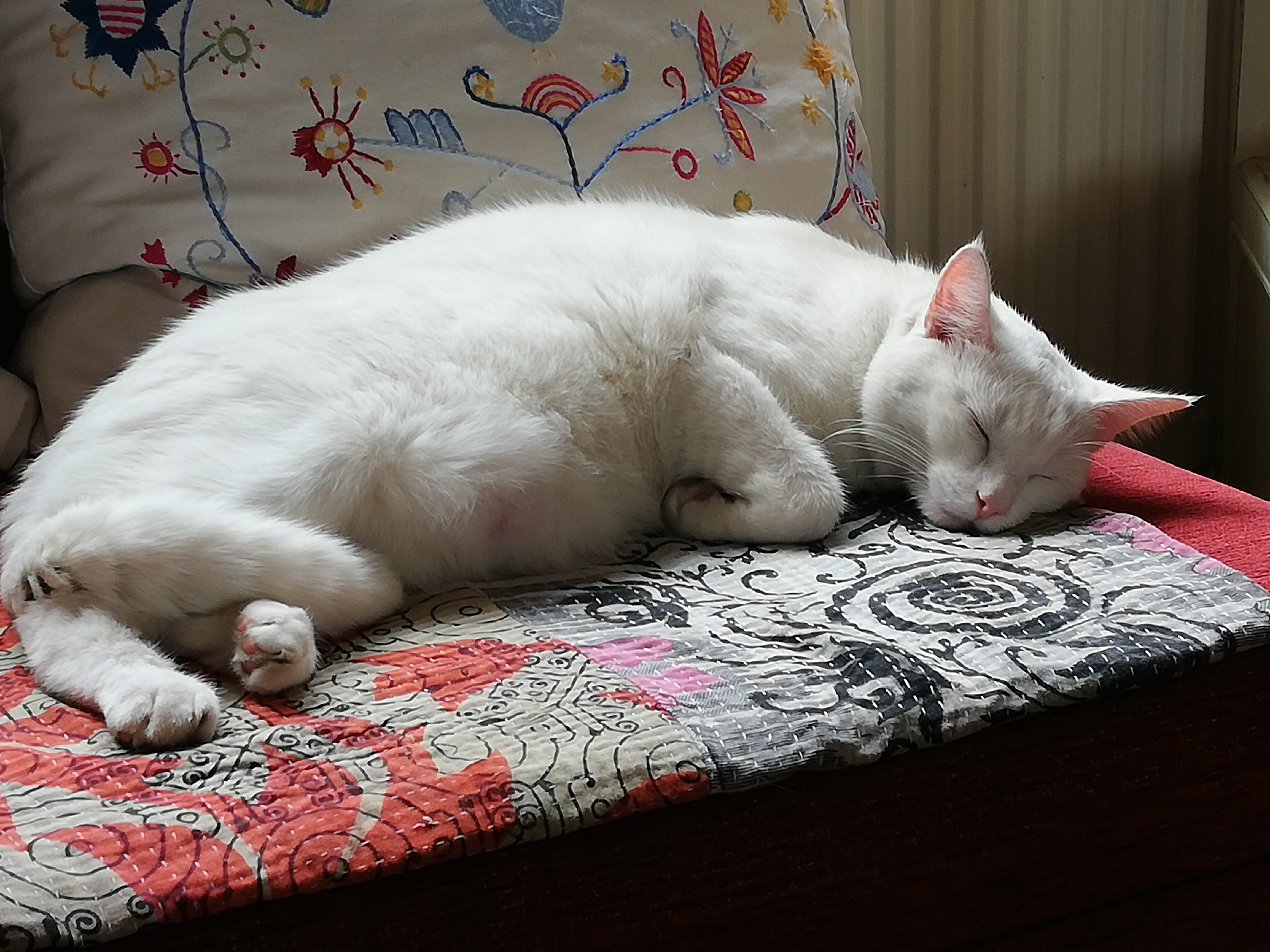
Sometimes, I should approach my desk with the relaxed attitude of Alfie, in the above photo, and let the words flow and my characters speak while ignoring the marauding shadow behind me. That’s what I intend to do later today – let’s see how that goes!

Happy Word Flow, One & All.