
Author Interview – Rayme Waters

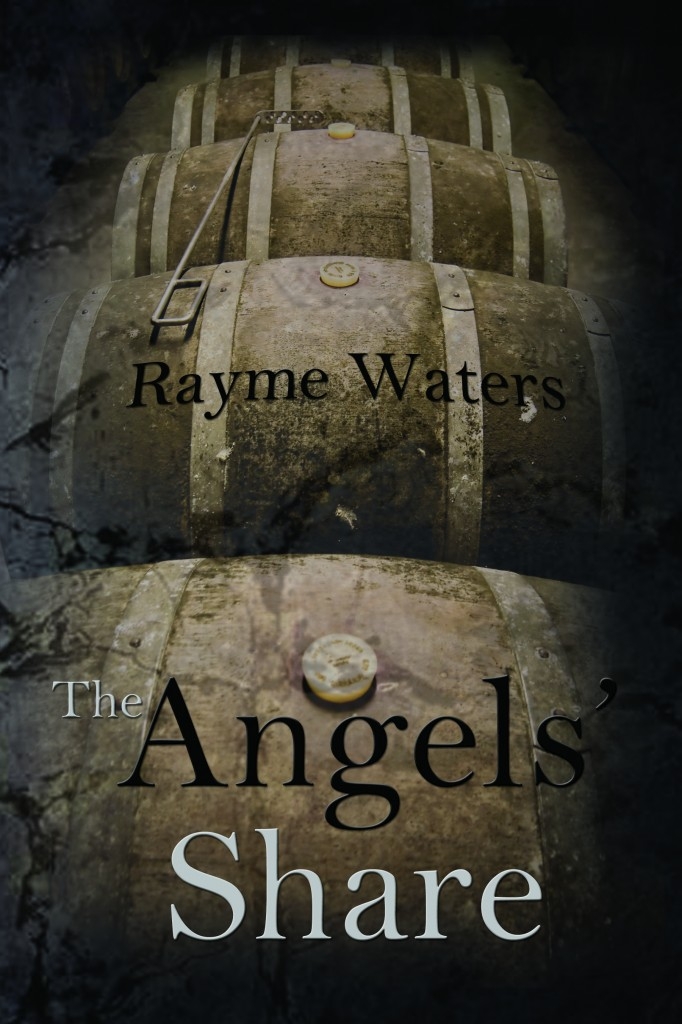
Today I interviewed the wonderful and charismatic Rayme Waters, author of  ‘The Angels’ Share’. Rayme answers diverse questions about writing. Grab a coffee, sit back and enjoy the read.

Tell us about your journey to publication.

I wrote twenty-seven drafts of my novel before it was accepted for publication. From chapter one to publishing contract it took eight years. The first five of that eight were just writing, getting feedback and then re-writing. I looked for an agent for about two years and another year to find a publisher, all while I was still editing and refining the story. There was a lot of rejection during those eight years. It was often difficult to keep up confidence.

What parts of your personality aid or hinder your writing?

I have great imagination and lousy discipline. You might think you know which one of these was an aid and one was a hindrance, but sometimes an active imagination can hurt because I’m getting so many new ideas that I get distracted. The lousy discipline means I don’t sit down and write fiction everyday, and this limits how prolific I can be, but it also allows me time between drafts and I’ve found that time is the best editor of all.

Where do your ideas come from for your novels?

Once I knew cooking basics, I stopped using recipes. I combine ingredients that work together and enjoy (mostly) what turns out. This is analogous to my writing. While I’ve studied craft, I don’t go in to any story with a complete plan. I have some general thoughts about setting, some sketchy details of a character and once I get it down on the page I see what sticks. One of the best essays about this technique can be found in Robert Boswell’s The Half-Known World.

What aspect do you find the hardest when writing?

Sitting down, sitting still and getting into the right mindset. Once I’m in that proper headspace I can do a lot of work quickly. I tend to write the most when I do a two or three day writing retreat when the distractions of home and family are at a distance.


What book do you wish you’d written, and why?

Can’t pick just one! Off the top of my head: Skippy Dies by Paul Murray. Black Beauty by Anna Sewell. Lisey’s Story by Stephen King.

How did you feel when you held your book for the first time?

I haven’t yet! People have been getting their deliveries before me and posting photos on Facebook. It’s been exciting to see The Angels’ Share on everyone’s kitchen counters.

Do you write straight onto the computer, or do you write long-hand in the first instance?

My Mac Air. If I get an idea when I’m not near my computer, I scribble it on anything—backs of receipts, paper out of the recycling bin or type it into the notes app on my phone. I find that if I don’t get ideas down right away they can vaporize.

What are you working on now?

My second novel is about a girl whose family moves from  San Francisco to a fancy Bay Area suburb only to discover the town in cursed. She alone can save her family, adopted hometown and new friends. And she has a good reason not to. The name of the novel is Grimm.

Links to purchase The Angels’ Share can be found on the Winter Goose Publishers site (click on link above right), or go directly to Amazon or Barnes & Noble.

Thanks to Rayme for taking the time to answer my questions.

Happy Word Flow One & All.

Writing Dialogue

Thinking RFID from @boetter
It would appear on the face of it that writing dialogue is easy. However, it’s not just a case of writing down the words spoken by our cast of characters, we have to consider whether the speech could be ‘told’ by us instead of spoken by the character. Is it vital that the character tells us, or can it be summarised.
If speech is important, the best way to see (or hear, to be precise) if it sounds natural is to read it aloud. That way we can feel if it flows correctly. When listening to conversation, we need to take note of the length of speeches, which generally tend to be on the short side, and to be aware that other people can interrupt another person, cutting their sentences mid-flow.
We shouldn’t use conversation to impart banal information such as weather. We should save speech to move the story along or to demonstrate how a character would react.
Years ago I joined an online critique group. One day we discussed the issue of he said/she said. I had a penchant for using alternative words such as ‘cried’. ‘exclaimed’ or ‘sighed’.. one member of the group told me that she’d never heard someone sigh words or exclaim words. Now I wasn’t very sure of myself back then (and I’m not super confident now…) and so I changed everything back to the plain he said/ she said. I then found myself reading novels by successful authors and I found that they also used alternative words as I had done. Henceforth, I now use a melange of both methods to keep the writing fresh.
It’s not always necessary to use any words after a conversation. If we’ve written it well enough, it should be obvious to the reader who is speaking.. However, if I have a lot of conversation to write between two people, I’ll occasionally mention who is speaking just so the reader doesn’t get lost.
We are forever learning as writers, but one thing I have learnt in this arena is that no one has the right answers. Nothing is cut and dried, and pushing the boundaries can enliven prose and enthral the reader. The more we read the more we learn, and as writers we need to continue down this road, so we have the best writing we can do to entertain our readers.
Happy Word Flow One & All.

Blogger’s Block

Summer from Rob North

I have been very remiss in writing my blog of late, and the reason is I’m so engrossed in writing my new novel,  I have little time to spare, which I know is wrong. I am spending as much time as possible reading, which is not only a passion, but also an essential  pastime of a writer. I review the books I read on Goodreads if you’re interested.

I have also slowed down on advertising my novel, ‘The Divine Pumpkin’ as I worry that people may feel I’m pushing it too much. There is a fine line to walk when it comes to promoting ones book, and I have, as yet, to find where the right line is.

I feel like I may be sounded down-hearted, but I am anything but. I’m 41,000 words into my next novel  and the characters are taking me on quite a journey. I am trying to write as much as possible to get the first draft down on paper as I’m aware that I’ll be editing my second novel to be published probably around Christmas time – pity my poor family, will they get gifts and a Christmas dinner this year?

We should all be inspired by the athletes at the Olympics, as they are prime examples of people working for years on a skill, to then only sometimes have a matter of minutes to shine. We authors also work very hard behind the scenes, for not much glory at times. I truly believe that readers my have very little awareness of how much time, work and tears have gone into writing the book. The only gold medals that exist in this realm are prizes such as the Booker or Orange award. so many authors, so few medals to go around.

If you are writing at the moment, I hope you are as absorbed and as distracted from real life as I am. It’s a glorious place to be! Perhaps not so much for the family at times!

Happy Word Flow One & All.