The Woes of Wednesday

Better DI W billboard

I originally wrote ‘In the Light of Madness’ as a stand-alone crime novel, featuring DI Eva Wednesday and DS Jacob Lennox, but I found I had an affinity with her, and being without her made my world seem a lonelier place. She intrigued me, and all her anxiety about having a mentally ill mother passing on her malady made me wonder what was in store for her?

Wednesday has a tantalising half-sister, Scarlett Willow, who always overshadowed her with her beauty and charisma when they were growing-up. Scarlett is bi-sexual, which seems to intrigue the men around her, including Jacob Lennox, who meets her at Wednesday’s home during one of their working-lunches. Even though he has a disdain for journalists in general, Scarlett’s profession doesn’t get in the way, and soon the pair enter into a relationship.

As their relationship rises, dips, and fizzles, and Scarlett’s own mental health comes under Wednesday’s scrutiny, she tries to warn Lennox without revealing her mother’s own mental ill health issues. She has always kept her mother’s condition a secret from the workplace, fearing the mis-conceptions on mental illness will prejudice against her role as a DI and prevent her from attaining a higher position in the future.

Wednesday is 39 yrs old, ordinary looking, single, with something in her past that makes her fear entering into a relationship again. She is bright, sometimes passive-aggressive, and fiercely loyal to guarding her private life from her work colleagues. She is a team player, likes using mind-maps to work out crimes, and often lacks self-confidence in her ability as a career woman and daughter.

As the series progresses, I love her more, and I hope that the readers find her just as intriguing and enjoyable to be around.

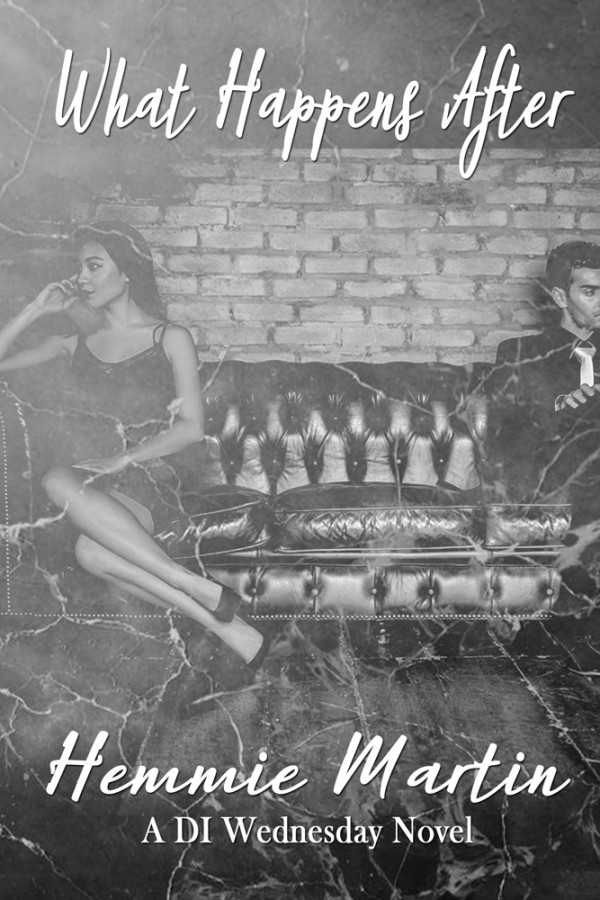
If you’re interested in reading the series in chronological order to follow the backstory of both of the detectives, the order is: In the Light of Madness, Rightful Owner, Shadows in the Mind, and What Happens After.
WHA_FLATforeBooks-600x900

Making Connections

2016-06-25 08.39.27

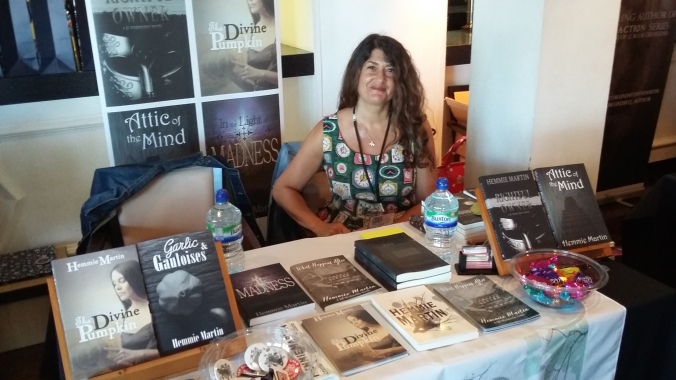
The Essex Author Book Signing Event in June 2016 was my third author event, and as with the last two, there’s an element of excitement and trepidation coursing through me, and  only when my table is set up do I feel ready to meet and greet readers.

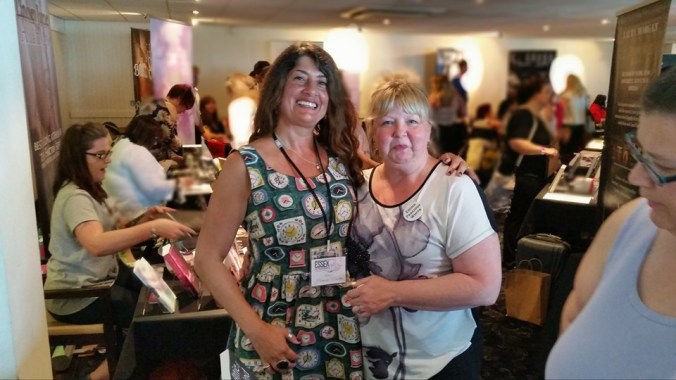
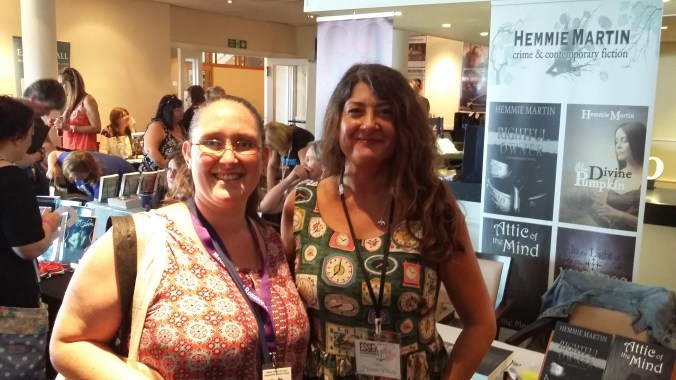
I was really looking forward to meeting a reader I had connected with online. Emma (pictured below) had read six of my novels and was bringing the paperbacks with her for me to sign. Emma is one of those special readers who leaves reviews on Amazon – which is always helpful to authors, as the more reviews a book gets encourages Amazon to recommend it to other readers, apparently. Meeting Emma made my day very special and reminded me that readers are real people!

Emma Precious White 2016

An author event isn’t just about selling books, it’s about meeting established and potentially new readers, and showing them you’re a real and approachable person, willing to connect with them regardless as to whether they have read one of your books or not.

Not everyone who approaches your table will purchase a book, but they may pick it up, read the book blurb, and discuss it with you. Some may say they want to look at all the other tables first, which is wise is funds are limited, whilst others may smile and leave. On several occasions at author events, readers will return to your table to purchase your book after thinking about it for a while. There is no need to rush into buying at these events.

2016-06-25 09.37.03

I noticed after this event that my book sales on Amazon UK increased. Maybe this was coincidental, or maybe readers who visited my table decided to try my book after all. There is also the option of purchasing the Kindle version which is considerably cheaper, especially when trying a new author. I sold a mixture of Kindle and paperback – so your guess is as good as mine!

Author events are about making connections with readers and with other authors, who will hopefully become firm allies in the turbulent writing world. If  you sell a few books, it’s a bonus!


2016-06-25 11.19.42

2016-06-25 11.34.58

2016-06-25 10.51.57

Middle Page Dread

everything is going to be alright

The début of a novel is exciting to write; we’re venturing out into an imaginary world where we’re in charge (until the characters wrestle that away from us with a dramatic flourish), and describing people and places to feed the hungry readers. It’s exhilarating!

The same can be said of the denouement. we’re tying up loose ends, revealing the murderer, or joining two people together, and hopefully giving satisfaction to the reader.

But the middle can be excruciating . It demands that we demonstrate our intimate knowledge of the characters, their reactions to scenarios, and towards other characters. A middle is no place to drift around aimlessly, lest we lose the reader before they reach the climax of the denouement, turning them from our other books forever.

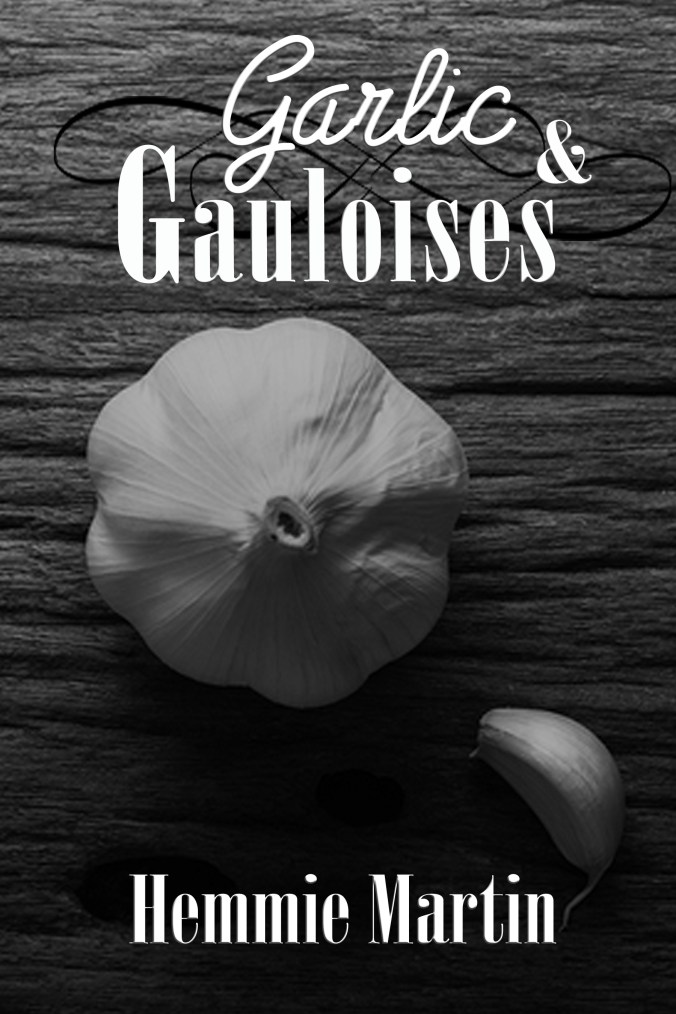
The middle is the time to delve into our knowledge of the craft of writing – the narrative arc, for example. We can also use movement of time to convey a character’s past, explaining why they are who they are today. We can hop over to another country (as I do in ‘Garlic & Gauloises’), to add definition to a character’s form or depth to the story. The options are numerous, it’s just a case of choosing one and running with it.

Conflict between characters, or sparking a romantic flame, can ignite the middle, but it needs to be in-character with the cast, not something thrown in the mixture that doesn’t blend. It would be like throwing minced beef into a cake mix because you’ve run out of the other ingredients.

If you’re stuck on the middle, stand back and look around the edges – are there frays that need snipping off or mending? If you’re bored, the chances are the readers will be too. Give the middle a focus to where you’re heading; don’t fill it with vacuous words and deeds,  as the readers will flounder and escape your imaginary tale quicker than a kingfisher darting across a river. Dig deep, write, and rewrite to provide a middle worthy of the reader’s attention, as well as our own.

Happy Word Flow One & All

G&G Flat (1)


The Writing Journey

black typewriter.jpg

When I’m writing a crime novel, I devise a mind-map to ensure that the red herrings, time lines, and clues are all available for the reader to find and follow. The mind-map ends up looking like an intricate landscape of an imaginary realm, with roads leading to dead-ends  before finally revealing the answer sought by the travelling reader.

However, writing contemporary fiction is a different beast altogether. I can’t tame it with time line restraints. No, instead, with these novels I sometimes only have a character in mind. I don’t know where they are going, or why they have revealed themselves in the first place. I do however, have a hook in mind; the reason behind the character and the novel.

Today, I’ve moved from sitting at my laptop,where I’ve been writing solidly for almost two hours, to now sitting outside, penning this blog post in a notebook. I’ve dried-up you see. I couldn’t see where the character was going or what she was thinking beyond the word I was typing.

But that’s okay. I’m travelling this journey, discovering surprises around every corner, and turning down roads I didn’t even know existed. This journey is exhilarating and keeps my sorely bleeding fingers glued to the keyboard, until I hit a dead-end.

That’s life, you see. Not every journey leads us to somewhere new or where we’d like to be. Sometimes we have to double-back and erase part of the journey, or sometimes we have to take rest stops to break up what could be a tedious trip. Sometimes we have a map, and at other times we are lead by our noses, taking in the bohemian lifestyle, and enjoying the nature and people we meet along the way.

All in all, writing a novel is a process of stringing thoughtful and challenging words and ideas together, until they begin forming the start of a journey a reader is intrigued  to travel, and we as authors wish to devise.

Right, I’m now ready to return to my novel, having spent this interlude with you. Thank you for keeping me company – I’m off travelling again.

Happy Word Flow One & All

IMG_7943

Wasted Emotions for Writers

B&W typewriter

We are all plagued by wasted emotions in our everyday lives; worrying about tomorrow, worrying if we fit in, etc. But as a writer, we have added concerns, which are equally a waste of time, but they concerned us nonetheless. I’ve written four worries below, which only scratches the surface, but if I included them all, this post would be unbearably long.

My writing isn’t worthy or intelligent

Not everyone has the urge or ability to write high-brow literary fiction, but does that really matter? Not all the plethora of readers want to read such novels all the time, if at all. A story that captures the reader and sparks their imagination is worth more than clever words. Besides, it’s hard to judge one’s own work, one reviewer classed my novel, Garlic & Gauloises, as literary fiction, but I hadn’t seen it in this light. What one person sees may not be seen by the next person. Just enjoy writing, and learn as you progress, who knows where it may lead you?

Comparing oneself with other authors

How often do we read a post by an author, telling of their success at publication, getting an agent, having a successful book signing, or being a top-rated Amazon author? All the time, I hear you cry. What we forget is that those authors have also been in the position of no agent, no publishers, and not selling well, but no one shouts about it; people only shout of their successes. We then think, to be like that person I must write in the same genre, make my book covers similar, and aspire to be like them. Well no, we should be who we are, and write with our own unique voice, as readers don’t want to read a homogenous range of books, they want diversity and a voice that draws them in, not that sounds like the other author they read.

How many books have been sold?

Ugh, that’s usually the first question people ask me, and it’s soul destroying to think that figures are the only thing that matter in the non-writing community. Of course it’s lovely to sell, I won’t lie, I get a warm glow when my sales graphs peak, but that’s not everything, and we mustn’t forget that. I remember my publisher saying that sales increase when you have a back catalogue, and he was right, people become hooked on your genre, style, or series. It’s a matter of being patient and learning your craft, so each book you produce improves as you progress.

What people think of your book?

Let’s face it, we can’t please all of the readers all of the time. What someone loves, someone else may find dreadful, and say so in a review; everyone’s a critic. We must not be defeated by negativity, unless all the reviews are the same, and so maybe telling us that something about the book isn’t working. That’s alright, we can correct the issue and move on. Do not, however, get into a battle of words with a reviewer, they have the right to give their opinion on the book, our job is to remain placidly in the background. Sometimes because people know you in real life, they might be of the opinion that you can’t possibly write well, so they don’t even bother to check you out!

Happy Words Flow One & All

WHA_FLATforeBooks-600x900

Inspiration for Female Characters

vintage-technology-keyboard-old-medium

I have often been asked who inspired the characters DI Eva Wednesday and her half-sister Scarlett Willow. As, I suspect, with most authors, they are a figment of my imagination, forged by the many women I have met over the years, plus nuances of myself. Over time, these women have become very real to me; I can see, smell, and hear them, and I hope the readers have a similar experience. My female characters tend to be strong women with flaws; an interesting mix to write.

Scarlett Willow, Eva’s step-sister (they share the same mother), is a journalist with a desire to get ahead in her field, and often tries to get inside information from Eva. She is flirty, vivacious, and bi-sexual, with long, red, pre-Raphaelite curls. She is the antithesis of Eva, who is less sure of herself, especially around men.

Scarlett is a melange of the young women I grew up and socialised with, who were classically beautiful, confident around men, and self-assured of the way they looked. They commanded attention when we were in nightclubs, which was always fun to observe!

Eva is a successful DI, but struggles with an under-lying anxiety about becoming mentally ill, as their mother suffers with schizoaffective disorder. She scrutinises Scarlett’s behaviours and worries about her too, with good reason. My interest in mental health issues stems from my nursing career, and all of my novels to date, have an element of mental health related issues woven in them.

Above all, these women are purely fictitious, and do not depict any woman I know in real life. They are fun to write about, especially when behaving badly, or suffering with some emotional issue, and I look forward to developing these characters further.

Happy Word Flow One & All.