The Next Big Thing – Week 16

The Next Big Thing blog hop is a concept devised by SheWrites for authors to tell people about their next book, whether it will be published or not. Below you will find the set questions I have answered in the style of an interview, which will hopefully make interesting reading.

I would like to thank Kathy Andrew http://www.akandrew.com  for tagging me in her post. You will find five other authors/poets tagged at the end of this post, and they will post their answers on the 16th October.

What is the title of your book? 
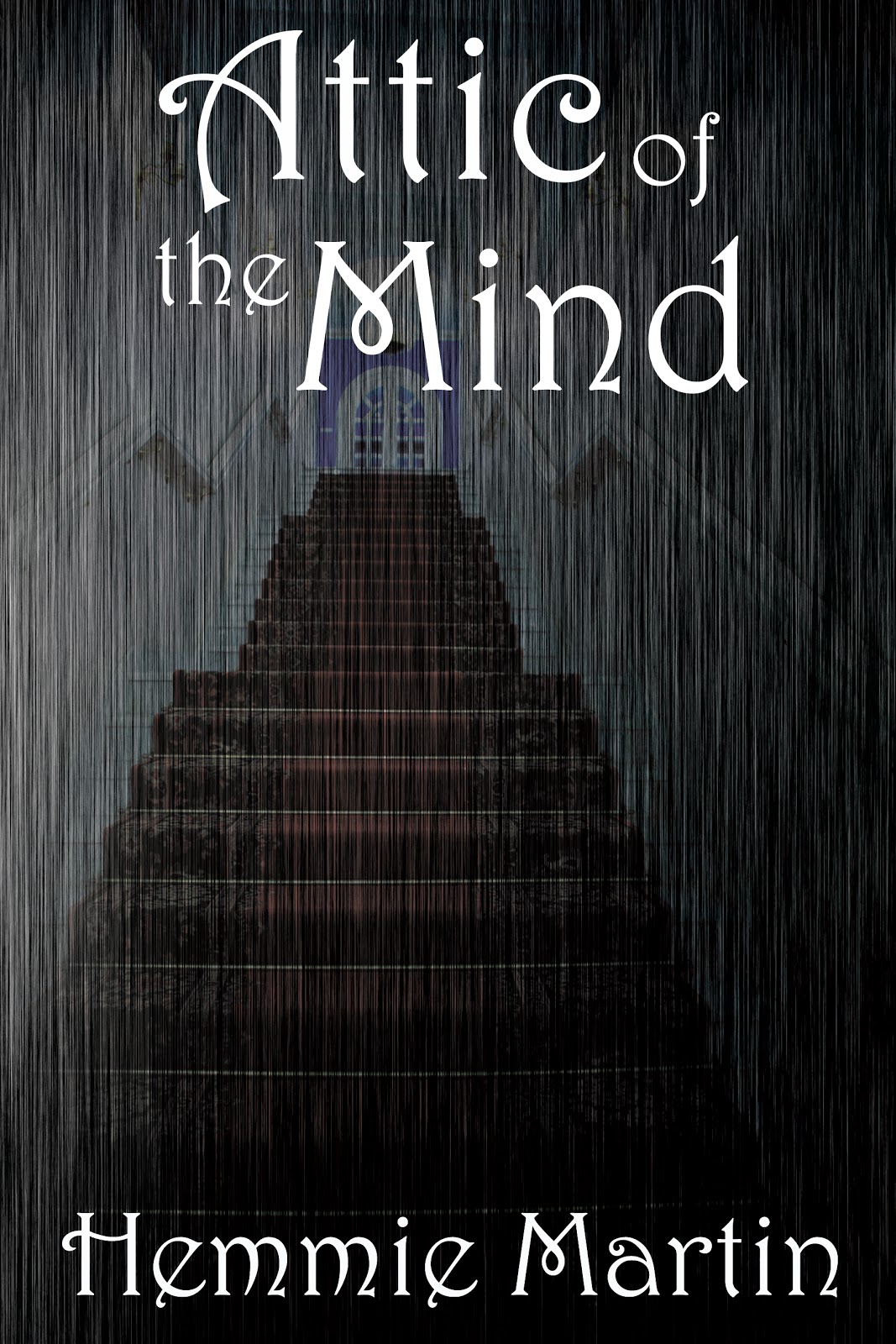
Attic of the Mind

What genre does it fall under?
 Contemporary Women’s Fiction with a dark edge.

Which actors would you choose to play your characters in a movie?

Lilith Fields – the abused girl, now avenging woman – Ruth Wilson

Dr. Nathan Rine – the hedonistic doctor – Hugh Grant

Finlay Walker – the sadistic nurse, now politician –  Liam Neeson

Dr. Hugh Carlton – the reliable doctor – Tom Hollander

What is the one-sentence synopsis of your book?
After twenty-five years, revenge is a bitter-sweet game played out with mixed results.

Will your book be self-pub or represented by an agency?
It will be published in February 2013 by Winter Goose Publishing.

How long did it take you to write the first draft?
Three months.

What other books would you compare this story to within your genre?
This is a tricky question, but I would hazard a guess at ‘Brighton Rock’ by Graham Greene and ‘The Girl with the Dragon Tattoo’ by Stieg Larsson. Having said that, I’m not comparing myself to greatness, but rather the darkness in the novels.

Who or what inspired you to write this book?
I was a student nurse in the late eighties in York. I spent three months working on a psychiatric ward in a hospital. When I described the ward and grounds in ‘Attic of the Mind’, I thought back to my days as a student and realised how that time and my memories of people there shaped my description in ‘Attic’.

Please also visit the wonderful people below:
http://mariamkobras.blogspot.com
http://tashtoo.com
http://lorcadamon.com
http://sarahelleemm.blogspot.com
http://sherryfoley.blogspot.com

Thank you for reading this, and I hope it has made you a little curious about my next novel.

Fear of Failure

Chocolate from John Loo
Fear just loves to block our creativity and word flow. It feeds off our negativity and gets stronger as our resolve to succeed gets weaker.
When we first start writing, we constantly compare ourselves to other authors. We devour their books and stand in awe at their mastery of words. We read of the success of others in writing magazines and on the web, and believe we’ll never reach their level. the more we disbelieve in ourselves, the more powerful fear becomes.
When we receive rejection after rejection following our submissions packages, it only goes to confirm that our writing isn’t good enough. Never mind the variables such as the agent has already got another very similar story, the agent has reached their quota, or simply the agent wasn’t interested out of personal taste. Rejection does not necessarily mean we can’t write, but fear doesn’t know that.
When we finally achieve publication – and we will if we persevere – we continue to let fear exploit our weakness and run our belief and creativity into the ground. We continue to read other novels and believe them far superior to our own. But perhaps we need to feel that on a certain level so we don’t stop striving to make each novel better than the one before.
Is there  way to stop fear eating away at us until our self-esteem looks like a moth-eaten cashmere jumper? Well maybe there are several ways, and we all have to find our own salvation. Some people swear by relaxation or Reiki; some people write a list of their positive attributes as a writer, and some people use positive thinking and visualisation. Some of you may feel these methods are too airy fairy, but you know, whatever way you find, if it helps keep fear down to the size of a grape instead of a watermelon, then go for it.
Talking to other authors in a similar position to oneself can also liberate our creativity, or at least make us realise that no matter where we are in the writing world, everybody experiences a fear of failure. 
Let’s not let it hold us back, let’s face it and poke our tongue out at it. We’re not infants at our first day of primary school, we have experience, courage, hope and the ability to overcome the niggles that fear throws before us. Inhale deeply and start believing. And if all fails – eat some chocolate!
Happy Word Flow One & All

Can Anybody Hear Me?

My beautiful eldest daughter.

Writing a book is one thing, marketing it is another. If I’m honest, I much prefer writing – even editing – rather than marketing, but it is the devil I need to grab by the horns.

I have read numerous articles both on paper and on the web, on how to promote oneself and the book in question. But I have always learnt better by modelling rather than just reading alone. But I no longer work as part of a team where I can ask someone to show me what to do. I am, of course, part of a virtual team with Winter Goose Publishing in America, but I can’t grab their hand, guide it to my laptop and say, “show me please.”

FaceBook and Twitter are mentioned frequently, but I can’t just use use both mediums to say, “look at me, buy my book,” I would lose friends/follows rapidly, and quite rightly so.

What can be disconcerting is that the web is bulging with authors trying to get their book noticed. What makes someone stand out more than another? Is it a eye-catching book cover? Is it a string of 5* book reviews? Is it a succession of novels to the author’s name? All of this issues count, and yet it must be more than that.

I am astounded when someone I don’t know on Twitter or FB – or at least I believe I don’t know – leaves a review on Amazon. I wonder where they found my book? Of course, I can’t ask them, but it would be a great learning curve to know what works, and ultimately what doesn’t.

Marketing is rather like searching for a shooting star. I can look towards to sky and see the stars, but the one I want is elusive and I only manage to see by luck. I can hear some of you screaming that marketing is not a matter of luck, but hard graft and intelligent use of the web. I agree!

 However, I believe there is also a certain amount of luck needed too. Luck in that someone spots your book, falls in love with it and spreads the word. Or luck that an agent or publisher find your book intriguing, or even luck that your genre is flavour of the month.

Someone told me that they marketed their own book and sold 200 books in one month. I have asked her to show me  her strategy, but I’m still waiting to hear from her. I will pass on the information as soon as I have it, as I’m sure we could al do with a little help in that area.

I was hoping to be a bit more market savvy before my next novel comes out in Feb 2013. I do at least have some more time before then, but I’m aware that working with an editor is very time consuming, plus I’m writing another novel at this moment in time, whilst trying to be a competent mother, wife, cook, homework wizard and housekeeper.

I have found services who will advertise my book for a fee, and they look very tempting. I have an advert out now in Mslexia, and I’ve also advertised in the local community magazine. I intend to pursue some of these avenues, especially when I have two books to sell. Some of the products that are available are too complicated for me to follow and understand. I don’t know whether that reflects badly on the product or on me!

I wasn’t born to sell wares, I was a nurse – a giver – and I now find I’m floundering in these murky waters. And yet all authors have to tread these waters, even the successful ones, so why should I be any different?

Perhaps someone out there has more answers than I do, answers that I can understand!. I’m hoping that someone can hear me now!

Happy Word Flow One & All

Each day I learn more about writing and marketing

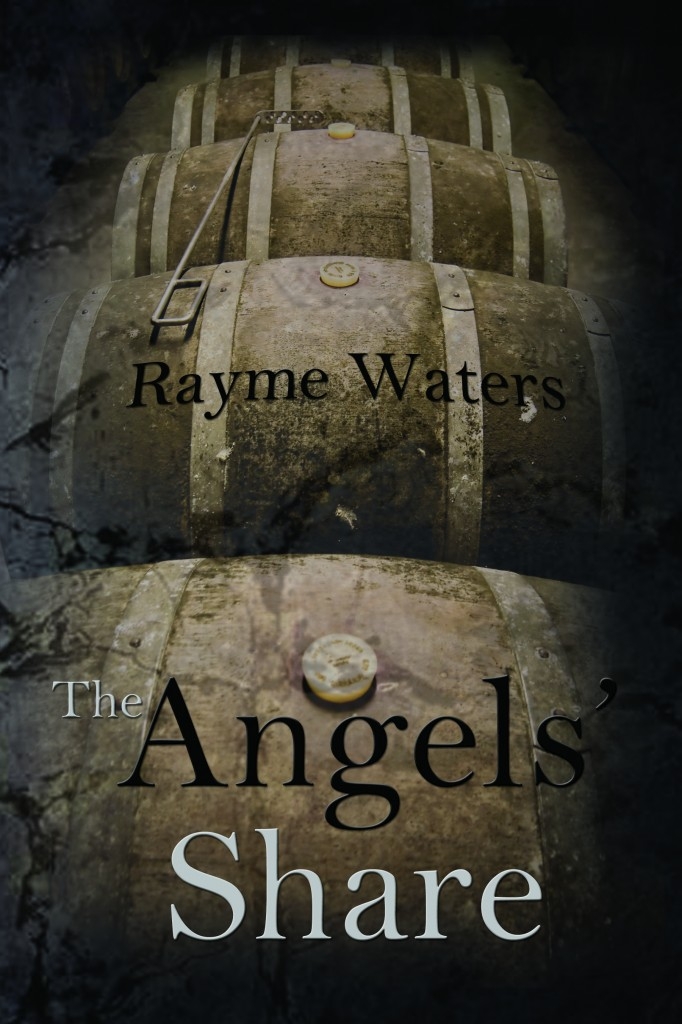
Author Interview – Rayme Waters

Today I interviewed the wonderful and charismatic Rayme Waters, author of  ‘The Angels’ Share’. Rayme answers diverse questions about writing. Grab a coffee, sit back and enjoy the read.

Tell us about your journey to publication.

I wrote twenty-seven drafts of my novel before it was accepted for publication. From chapter one to publishing contract it took eight years. The first five of that eight were just writing, getting feedback and then re-writing. I looked for an agent for about two years and another year to find a publisher, all while I was still editing and refining the story. There was a lot of rejection during those eight years. It was often difficult to keep up confidence.

What parts of your personality aid or hinder your writing?

I have great imagination and lousy discipline. You might think you know which one of these was an aid and one was a hindrance, but sometimes an active imagination can hurt because I’m getting so many new ideas that I get distracted. The lousy discipline means I don’t sit down and write fiction everyday, and this limits how prolific I can be, but it also allows me time between drafts and I’ve found that time is the best editor of all.

Where do your ideas come from for your novels?

Once I knew cooking basics, I stopped using recipes. I combine ingredients that work together and enjoy (mostly) what turns out. This is analogous to my writing. While I’ve studied craft, I don’t go in to any story with a complete plan. I have some general thoughts about setting, some sketchy details of a character and once I get it down on the page I see what sticks. One of the best essays about this technique can be found in Robert Boswell’s The Half-Known World.

What aspect do you find the hardest when writing?

Sitting down, sitting still and getting into the right mindset. Once I’m in that proper headspace I can do a lot of work quickly. I tend to write the most when I do a two or three day writing retreat when the distractions of home and family are at a distance.


What book do you wish you’d written, and why?

Can’t pick just one! Off the top of my head: Skippy Dies by Paul Murray. Black Beauty by Anna Sewell. Lisey’s Story by Stephen King.

How did you feel when you held your book for the first time?

I haven’t yet! People have been getting their deliveries before me and posting photos on Facebook. It’s been exciting to see The Angels’ Share on everyone’s kitchen counters.

Do you write straight onto the computer, or do you write long-hand in the first instance?

My Mac Air. If I get an idea when I’m not near my computer, I scribble it on anything—backs of receipts, paper out of the recycling bin or type it into the notes app on my phone. I find that if I don’t get ideas down right away they can vaporize.

What are you working on now?

My second novel is about a girl whose family moves from  San Francisco to a fancy Bay Area suburb only to discover the town in cursed. She alone can save her family, adopted hometown and new friends. And she has a good reason not to. The name of the novel is Grimm.

Links to purchase The Angels’ Share can be found on the Winter Goose Publishers site (click on link above right), or go directly to Amazon or Barnes & Noble.

Thanks to Rayme for taking the time to answer my questions.

Happy Word Flow One & All.


Writing Dialogue

Thinking RFID from @boetter
It would appear on the face of it that writing dialogue is easy. However, it’s not just a case of writing down the words spoken by our cast of characters, we have to consider whether the speech could be ‘told’ by us instead of spoken by the character. Is it vital that the character tells us, or can it be summarised.
If speech is important, the best way to see (or hear, to be precise) if it sounds natural is to read it aloud. That way we can feel if it flows correctly. When listening to conversation, we need to take note of the length of speeches, which generally tend to be on the short side, and to be aware that other people can interrupt another person, cutting their sentences mid-flow.
We shouldn’t use conversation to impart banal information such as weather. We should save speech to move the story along or to demonstrate how a character would react.
Years ago I joined an online critique group. One day we discussed the issue of he said/she said. I had a penchant for using alternative words such as ‘cried’. ‘exclaimed’ or ‘sighed’.. one member of the group told me that she’d never heard someone sigh words or exclaim words. Now I wasn’t very sure of myself back then (and I’m not super confident now…) and so I changed everything back to the plain he said/ she said. I then found myself reading novels by successful authors and I found that they also used alternative words as I had done. Henceforth, I now use a melange of both methods to keep the writing fresh.
It’s not always necessary to use any words after a conversation. If we’ve written it well enough, it should be obvious to the reader who is speaking.. However, if I have a lot of conversation to write between two people, I’ll occasionally mention who is speaking just so the reader doesn’t get lost.
We are forever learning as writers, but one thing I have learnt in this arena is that no one has the right answers. Nothing is cut and dried, and pushing the boundaries can enliven prose and enthral the reader. The more we read the more we learn, and as writers we need to continue down this road, so we have the best writing we can do to entertain our readers.
Happy Word Flow One & All.

Blogger’s Block

Summer from Rob North

I have been very remiss in writing my blog of late, and the reason is I’m so engrossed in writing my new novel,  I have little time to spare, which I know is wrong. I am spending as much time as possible reading, which is not only a passion, but also an essential  pastime of a writer. I review the books I read on Goodreads if you’re interested.

I have also slowed down on advertising my novel, ‘The Divine Pumpkin’ as I worry that people may feel I’m pushing it too much. There is a fine line to walk when it comes to promoting ones book, and I have, as yet, to find where the right line is.

I feel like I may be sounded down-hearted, but I am anything but. I’m 41,000 words into my next novel  and the characters are taking me on quite a journey. I am trying to write as much as possible to get the first draft down on paper as I’m aware that I’ll be editing my second novel to be published probably around Christmas time – pity my poor family, will they get gifts and a Christmas dinner this year?

We should all be inspired by the athletes at the Olympics, as they are prime examples of people working for years on a skill, to then only sometimes have a matter of minutes to shine. We authors also work very hard behind the scenes, for not much glory at times. I truly believe that readers my have very little awareness of how much time, work and tears have gone into writing the book. The only gold medals that exist in this realm are prizes such as the Booker or Orange award. so many authors, so few medals to go around.

If you are writing at the moment, I hope you are as absorbed and as distracted from real life as I am. It’s a glorious place to be! Perhaps not so much for the family at times!

Happy Word Flow One & All.