Meet Robert James Russell

Name: Robert James Russell
Book title: Sea of Trees
Genre: Literary Thriller; Suspense
Publisher: Winter Goose Publishing
Date of publication: May 2012
Book blurb:
Swirling mystery permeates Sea of Trees as Bill, an American college student, and his Japanese girlfriend Junko traverse the Aokigahara Forest in Japan—infamous as one of the world’s top suicide destinations—in search of evidence of Junko’s sister Izumi who disappeared there a year previous. As the two follow clues and journey deeper into the woods amid the eerily quiet and hauntingly beautiful landscape—bypassing tokens and remains of the departed, suicide notes tacked to trees and shrines put up by forlorn loved ones—they’ll depend on one another in ways they never had to before, testing the very fabric of their relationship. And, as daylight quickly escapes them and they find themselves lost in the dark veil of night, Bill discovers a truth Junko has hidden deep within her—a truth that will change them both forever.
How long did it take you to write this book?
Actually, the first draft took me just over a month when pen first hit paper, so to speak. I spent two months before that doing research on Aokigahara and Japanese society and customs, so when I was ready to start it flowed out like water—I was lucky.
How did you find a publisher?
Trial and error. Finding a publisher (or an agent, even) is not a fun chore, and I’d wager for most writers it’s their least favourite part of the process. Needs to be done, though. You’ll get lots of notes from people who may not want to publish your work, but like it (or, alternatively, notes from people who don’t like it at all), and the trick is learning when their advice should be heeded and when you should stick to your guns and not change a thing—it’s just a feeling you get. Ultimately, though, it’s about perseverance: Even if you don’t feel like it, you get back out there and try again until something sticks.
How have you promoted your book?
It’s all about social media these days. Taking active part—especially on Twitter—helps people discover you. There’s a lot of give and take (you reTweet someone, they reTweet you back), and it’s not always fun to constantly have to sell yourself, but it’s necessary, and with any luck, you reach one new person every time you log on or take part in a discussion. If they, in turn, tell at least one person, you can get the ball rolling.
I’m also a big fan of bookstores, and have called around to my local shops, going in to meet face-to-face and bringing in samples, really trying to promote the local aspect. I’m lucky—where I live there is a thriving arts community that is all about local artists.
No matter what happens, though, much like with sending your work out to publishers, you have to work hard and keep at it.
How do you combat writer’s block, if you indeed experience it?
For me it’s forcing myself to write, even if it’s not related to my WIP, just the act of writing and being creative helps open me up.  I sometimes even give myself an assignment—such as write about someone specific doing something specific—that really forces me to get over any dry spell.
What other writing do you do?
I’ve had poetry and short stories published in various journals: http://www.robertjamesrussell.com/writing/
What methods do you use to plan/write your book?
In general I’m more of a “dive right in” kind of guy. I do outline, but tend to do more of it as I progress with the draft, stopping to write short bios on characters (to better help feel out their emotions and whatnot), etc. But a big part of my writing style is doing a great deal of preparation in my head and then jumping right in to the actual writing. For Sea of Treesthere was more planning at the beginning, because I was dealing with things foreign to me and I wanted to make sure I had fully researched everything—to get it right—before the actual writing.
How long have you been writing prior to getting published?
In some form since I was about ten years old—I started writing these fantasy epics involving elves and even published my own books through our school library. I’ve always been interested in art—specifically cartoons—and, before exclusively wanting to be a writer, desired to be an animator for Disney. I even drew and sold my own comics during lunch at school for a few years in middle school. Regardless, though, I think the idea is the same—storytelling—and that’s been with me since as long as I can remember.
How do you cope with rejections?
No one likes to be rejected, period, but it’s something you have to get used to as a writer (or as an artist in general, really). Even the absolute brightest and best of us out there get rejected, so you have to expect it will happen. I think if you start believing yourself to be special—that rejection does not apply to you—that’s when you start running into problems. But, rejection happens, and you don’t have to like it (some pouting is 100% acceptable), then you force yourself to get over it and move on to the next. It’s all you can do.
What piece of advice would you give to debut writers?
Cliché, I’m sure, but never give up. If writing is your passion—if you are, in all senses of the word, a writer, living and dreaming of it even when you don’t want to be—then you can’t let rejection or writer’s block or just the doldrums get you down. You have to write as much as you can and constantly improve what you do (I fervently believe that every day, even if you don’t necessarily output something decent, you are better than the day before—it’s all about learning from what you’ve done) and just know that you will, eventually, reach someone…somewhere. I mean, that’s what it’s all about, right?
Are you currently writing another book?
I’m kicking around a few ideas, yes. But that’s all I can say at the moment.
Where can your book be purchased from?
                Thank you for taking part.

Seeking Perfection

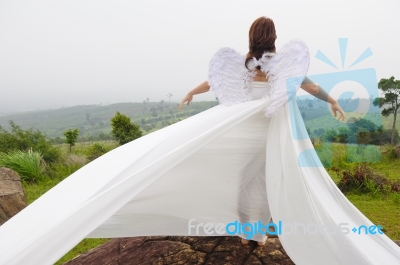
                              Photo: Angel by Just2shutter

I don’t know what’s wrong with me at the moment. I’ve started a new novel, but my ever-present companion Mr. Critic, is looking over my shoulder and berating my effort. I’m 21,000 words into it, but I keep re-reading and tweaking it.

Now I know that I should just get the story written before I begin the long process of re-drafting and editing., but for some reason I’m stuck. I’ve written a mind map plotting the story, and I have cue cards for each character to remind me of their features and personality, so I should really know where I’m going.

So, what to do?

Well, when I’ve written this I’m going to make an earl grey tea and then settle down to write. I will endeavour to ignore the voice telling me that my words are weak, spelt incorrectly (this I DO find hard to ignore) and the plot isn’t interesting enough. I must try and say this mantra, ‘it’s not the best but it’s god enough for now’. The poet David Harsent said, ‘All writing is rewriting’ . A great phrase to remember.

I have just recently been through the editing process with my Editor, so I’m aware that  I have several rewrites before I even send this one to him, and then numerous edits with him.. It’s a long process – and we all know it.

Losing confidence is apparently a common phenomenon amongst writers, so instead of allowing myself to be buried under it’s colossal weight, I’m going to type away at the keyboard and write the bare bones of this novel. The characters are already living in my head, so I should listen and let them speak as they will guide me down paths I haven’t even thought of. It worked in the past so I should stop being anxious and afraid and just get on with writing.

Hope the words are flowing for you, but take solace in the fact that we all feel this way at times.

Happy Word Flow One & All

                                     Just Write by Sean Magantee.

Feeling the Fear

I am a naturally shy person when it comes to talking about myself. I tend to talk quickly believing that people will get bored of listening if I go on too long. So when my novel, ‘The Divine Pumpkin’ appeared on Amazon US on Wednesday, I was suddenly thrown into a world of self-promotion.

 Now I was hoping to share the fun interview I had with Kim Larocque on her blog, but I have been defeated by technology. Search for her in Twitter – her blog is definitely worth a read. I enjoyed Kim’s interview as she asked me random questions such as describing myself with my initials H & M. It felt unreal taking part in the process and it was bizarre seeing Kim tweet the post. I couldn’t quite believe that I’d entered the world of being a published author.Pinch me.

 However, I am now consumed by the fear that my novel will get lost in the ocean of books already available. How do you get noticed? And here we find self-promotion to be the key. But there’s a fine line between getting yourself noticed and annoying people with ‘look at me’ tweets and posts. With technology, it can be easy to flag up your book, but it is just as easy to over-promote and get people turning away in their droves.

 I concentrated so much on the craft of writing a novel, a query letter and a synopsis, that I paid little attention to how I would manage things once I had a publisher. And now that is exactly where I am. Of course my publisher, Winter Goose Publishing, also promote me, I am not alone in that sphere. But I have to make an effort too. I know an aspiring author who refuses to have a blog, join Twitter or Facebook He is seeking an agent with the view that he won’t have to promote himself. I pointed out that authors such as Katie Fforde are on Twitter and have fan pages on FB. Some people aren’t prepared to listen.

 I am a little lost with the amount of bloggers willing to review or interview a book or an author the plethora of sites willing to promote you at a cost, and even other sites such as Goodreads sometimes has me lost. The point of all the above is to say, start entering the cyber world and get used to talking about ‘moi, moi, moi’ somewhat so it doesn’t come as a massive, nausea inducing shock when your book gets ‘out there’.

 If you’re interested in reading ‘The Divine Pumpkin’ then click on the Winter Goose badge and go to my page. There, I used every last second to promote myself!

 Happy Word Flow One & All

The Wonderment of Description

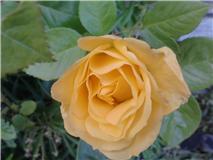
                                  A rose from our garden.

As a writer, we want the reader to see what we’re seeing in detail, even if they fill in some of the blank spaces independently. We have the ability to enable the reader to immerse themselves in the location and time period that we have chosen for our story.

But it’s not just the sweeping descriptions of hair colour, stature or the various shades of blue of the sky that we look to convey. Viewing the tiny details such as nail polish colour, cushion covers, nets at the windows or the pottery on display in the kitchen, also matter. If we add a chip to the nail polish or pottery, it can change the perception of the reader, and speak volumes about the character or home environment.

As a writer, we must try and see the world through the eyes of a child to evoke the feelings of awe and wonderment.  The shape of the protagonist’s tears, the type of wood a table is made from, how many water marks are dotted on the surface, to the texture and browning of a ceiling above a cluster of candles that are frequently lit.

Describing objects or the location in detail is another method for giving our fiction the reality it requires to hook and engage the reader, whether it takes place in the local pub or in outer space. All this enables the reader to place themselves alongside the characters in our books.

Sometimes we want the reader to start thinking for themselves, and so we deliberately leave blanks in our descriptions. We perhaps want them to see that a certain character is afraid, or not who they appear to be without using the actual words. We may describe their tone of voice or the odour emanating from their armpits to be subtly descriptive.

I always carry a notebook with me in case I see something I’d like to use in a current WIP. The way to describe the colour, smell, taste or texture of something may enter my mind in a flash, and I want to capture those words before i forget them again.

Enjoy seeing the world through renewed vision, it could just be what your WIP requires.

Happy Word Flow One & All

A Place to Write

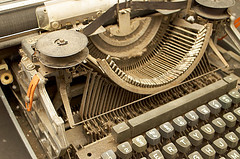
                                  Photo: Word Processor from Rahady

In a dream world, I have a writing room lined with books. I have a Victorian writing desk and an ergonomic chair on wheels which allows me to float around the room at my leisure. A large jar of jelly beans sits next to the computer. In one corner of the room, is a coffee making machine which makes the most delectable cappuccinos in the world. Through the window I have a view of rolling hills in the distance, with my garden full of flowers, birds and hedgehogs surrounding the house. A huge crystal vase of scented flowers sits on another small table, and a sign reading ‘Do Not Disturb’ hangs on the door.

But I’m based in reality, and my home doesn’t afford the luxury of such a space – and neither do my teenage daughters! I have read a variety of ideas on this topic, and many articles recommend that a writer finds a dedicated spot in the house so as declare yourself as a serious writer to those around you.

However, I’ve also read interviews with established authors who say that they don’t have a dedicated space, and instead use the corner of the kitchen or dining room table. And remember, these are established authors.

As for my writing habit, I have a Victorian, marble-topped washstand in the lounge which I use as my desk to keep writing paraphernalia on, and also underneath in fabric covered box files. However, I tend to use the sofa with my laptop on my knee, or my bedroom. The latter is the most private space a my 17yr old is at 6th form college as studies at home 3 mornings or afternoons a week. I like to listen to classical music, or my current ‘love’, the Seahorses on my ipod.

Space for me isn’t a premium, but rather the space in my head where ideas can form and grow into interesting characters and plot lines, is. Space to think can be found almost anywhere, and as writers, we mustn’t believe we can’t write unless we have the ideal space to do it in. Some people may be lucky enough to have such a dream, but a lot of us will be happy just to have the time and peace to write in.

Hang onto your dreams, dear friends, and write wherever and whenever you can.

Happy Word Flow One & All.

My Most Beautiful Thing

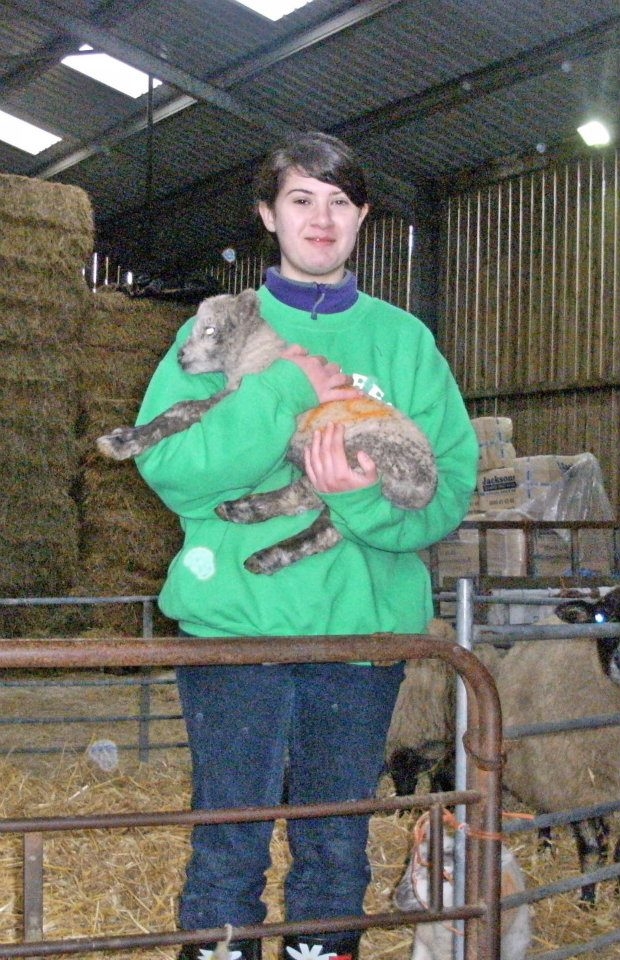
Jessica lambing on a farm this spring.

Today I’m taking part in the ‘My Most Beautiful Thing’ Blogsplash, inspired by Fiona Robyn’s new novel, The Most Beautiful Thing. Follow her on Twitter: @fiona_robyn and on Facebook

How do you explain motherhood to someone without children?
One of the first sentiments I remember after giving birth, apart from overwhelming love, was the weight of responsibility that was now on my shoulders. I not only had to provide the basic needs, I had the responsibility to ensure the tiny person would grow into a caring, well-rounded and educated individual.

That’s only the start. Each stage of childhood demands more ingenuity, knowledge, patience, love and strength from motherhood. I have felt immense joy, failure, honor, hope, love and fear over the years as my beautiful daughters have grown into teenagers – now 17yrs & 15yrs.

As they venture into new, uncharted territory, I hold my breath and hope they will cope with their new experiences. I want them to appreciate the life they have been given, and hold onto their dreams of a positive future for themselves and the world around them. They already display a wondrous love for family, friends and animals, which is a good start n my view.

Motherhood is painful, exhausting, exciting, surprising, frightening, fun, but most of all – Beautiful!